

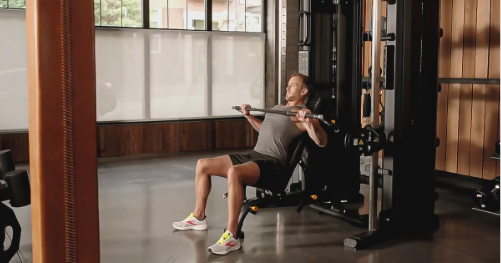
Biomechanical Design in Modern Gym Equipment
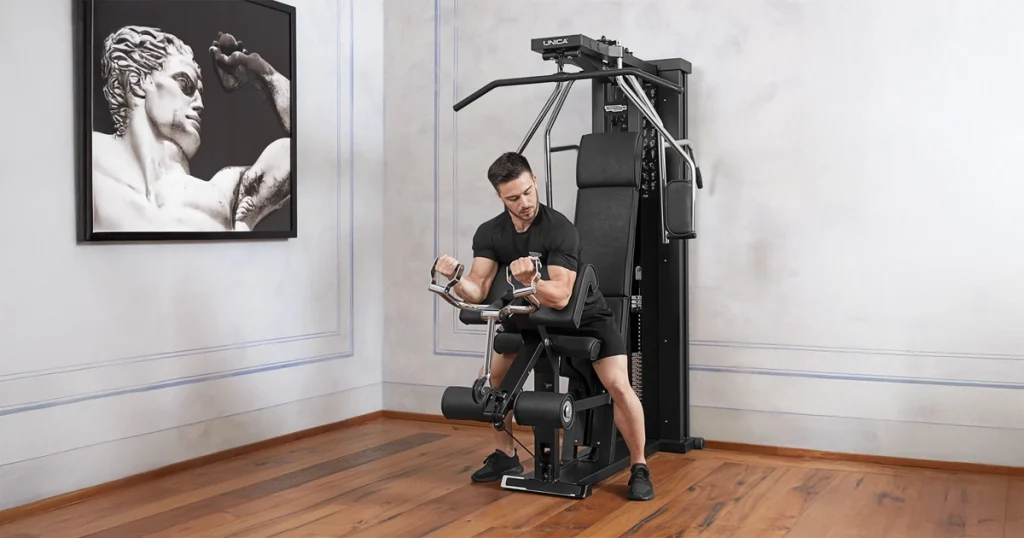
Biomechanically designed gym equipment has reshaped the modern fitness industry by prioritizing how the human body naturally moves. Instead of forcing users into rigid motion paths, today’s machines are built around human movement biomechanics. This shift allows workouts to feel smoother, safer, and more effective for a wide range of fitness levels. As awareness grows, biomechanics in fitness equipment is no longer optional but essential.
Modern gyms now focus on comfort, safety, and long-term performance outcomes. By improving joint alignment during exercise and supporting natural movement patterns, biomechanical design reduces strain while increasing training efficiency. Brands like Vibe integrate these principles across cardio, strength, and accessory collections to support smarter training environments. The equipment has good biomechanical adaptation.
Understanding Human Movement Biomechanics
Human movement biomechanics studies how muscles, joints, and bones interact during physical activity. Every joint has a specific movement pathway, and when equipment ignores these patterns, stress builds in vulnerable areas. Proper joint alignment during exercise ensures muscles work efficiently while joints remain protected. This balance is the foundation of ergonomic gym equipment design.
The biomechanically designed gym equipment accounts for resistance direction, leverage points, and body positioning. These elements work together to create gym equipment movement mechanics that feel natural rather than restrictive. When machines follow the body’s structure, users experience improved control and reduced discomfort during training sessions.
Core biomechanical principles used in equipment design
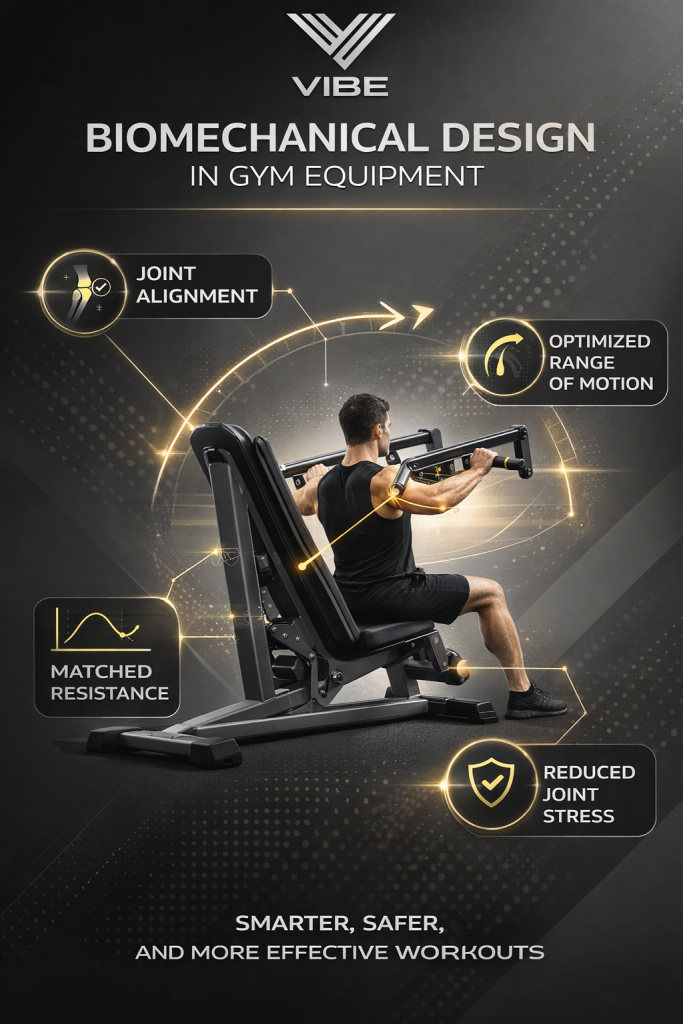
• Joint alignment during exercise to reduce unnecessary strain
• Range of motion optimization for full muscle activation
• Force curve matching to support consistent resistance
• Leverage and cam profiles that adapt to strength variation
Each principle plays a role in creating joint-friendly gym equipment that supports long-term fitness goals.
Why Intelligent Biomechanical Engineering Is Redefining Gym Equipment Standards
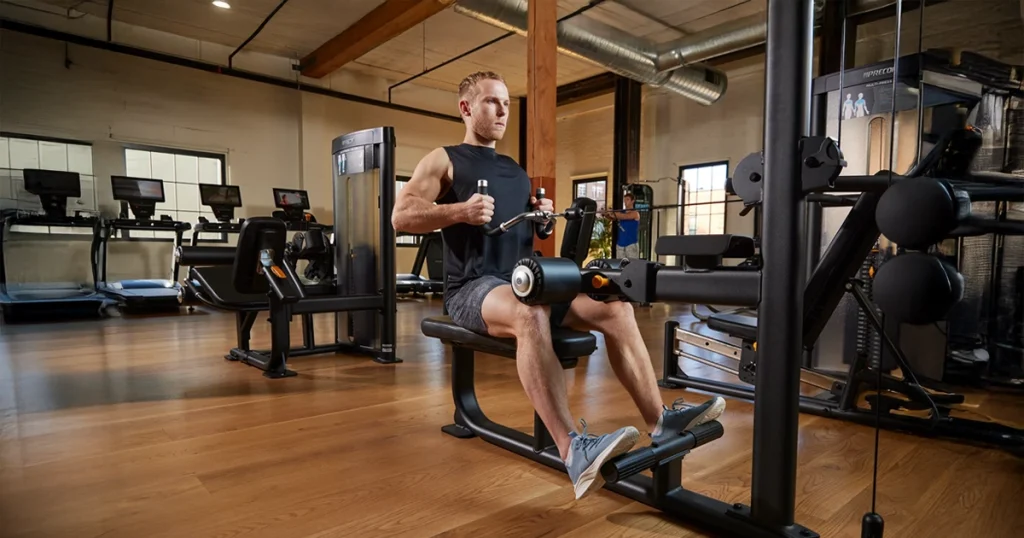
Earlier generations of gym machines relied on rigid movement paths that assumed everybody moved the same way. In reality, differences in limb length, joint structure, mobility, and training experience significantly affect how a person should load and perform an exercise. When equipment fails to account for these variables, users often compensate with poor posture, restricted range of motion, and unnecessary joint strain.
Modern biomechanical engineering addresses this flaw by designing equipment that adapts to the user’s structure and movement patterns. Adjustable axes of rotation, optimized resistance curves, and anatomically aligned motion paths allow the body to move naturally instead of being forced into mechanical conformity.
This shift has two major outcomes: enhanced injury prevention and improved performance. Proper alignment reduces excessive shear forces on joints and minimizes overuse stress. At the same time, biomechanically refined resistance profiles increase strength output by keeping muscles under effective tension throughout the full range of motion.
An equally important objective often overlooked is precise muscle isolation. Advanced equipment design stabilizes the body while directing resistance specifically toward the target muscle group. By minimizing compensatory involvement from secondary muscles, users achieve cleaner contractions, improved neuromuscular control, and more efficient hypertrophy stimulus. This is particularly valuable in rehabilitation, physique training, and corrective programming.
For fitness facilities, investing in biomechanics-driven equipment expands accessibility and inclusivity. Beginners benefit from safer guidance through proper movement paths, older adults experience reduced joint strain, and advanced athletes gain more precise performance tools. The result is a training environment that supports:
- Lower injury risk through anatomical alignment
- Enhanced muscle isolation and engagement
- Stronger force production across the full range of motion
- Greater comfort during longer sessions
- Broader usability for diverse populations
As training standards continue to evolve, natural-movement-focused equipment is no longer a luxury; it is becoming a foundational requirement for gyms that prioritize safety, performance, and long-term member retention.
Ergonomic Gym Equipment Design and User Comfort
Ergonomic gym equipment design focuses on how the body feels throughout an exercise, not just at peak effort. Seat positioning, handle placement, and foot support all influence posture and stability. When these elements align with biomechanics, users maintain neutral joint positions naturally.
The biomechanically designed gym equipment minimizes unnecessary tension and fatigue. This allows athletes to focus on performance rather than adjusting their body position. Vibe applies these ergonomic principles across benches, racks, and accessories available at https://vibefit.net/benches-racks/ and https://vibefit.net/accessories/.
Gym Equipment Movement Mechanics Explained
Gym equipment movement mechanics describe how resistance travels through a machine during each phase of an exercise. Poor mechanics create uneven loading that stresses joints at weak angles. Biomechanically designed gym equipment corrects this by aligning pivot points with natural joint rotation.
When resistance flows smoothly, muscles remain under consistent tension while joints stay protected. This improves control and reduces compensation patterns that often lead to injury. The result is safer, more effective training for all users.
Comparison of traditional and biomechanical equipment
| Feature | Traditional Equipment | Biomechanical Equipment |
| Movement path | Fixed and rigid | Adaptive and natural |
| Joint stress | Higher risk | Reduced strain |
| Resistance flow | Uneven | Consistent |
| User comfort | Limited | Enhanced |
This comparison highlights the value of biomechanics in modern gym design.
Joint Friendly Gym Equipment and Injury Prevention
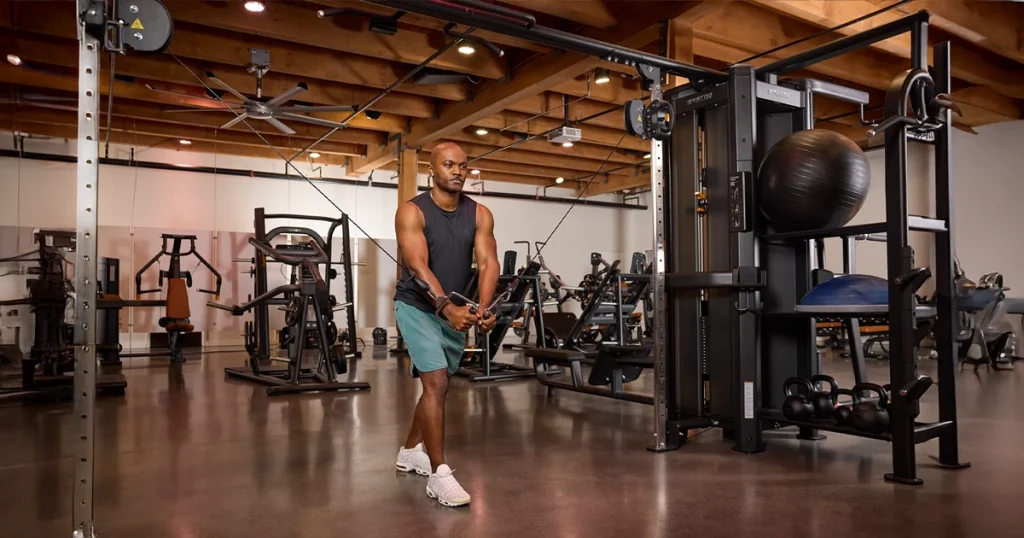
Joint-friendly gym equipment is designed to protect connective tissue by minimizing torque and compression forces. This is especially important for high-frequency training and rehabilitation-focused workouts. Injury prevention equipment design emphasizes controlled motion and adaptable resistance.
Range of motion optimization ensures muscles work fully without forcing extreme positions. By supporting natural joint paths, biomechanically designed gym equipment helps users train harder while staying safe.
Vibe cardio solutions at https://vibefit.net/cardio/ demonstrate this balance through smooth and low-impact motion systems.
Natural Movement Fitness Machines and Performance Gains
Natural movement fitness machines allow the body to move freely within safe boundaries. These machines respect multi-directional movement and subtle anatomical differences between users. As a result, exercises feel intuitive and controlled.
Biomechanically designed gym equipment enhances neuromuscular coordination and improves muscle synergy. This leads to improved strength transfer and functional performance. Facilities that prioritize natural movement create environments focused on long-term health rather than short-term intensity.
Force Curve Matching and Leverage Systems
Force curve matching ensures resistance aligns with muscle strength throughout an exercise. Muscles are stronger at some joint angles and weaker at others, so resistance must adapt accordingly. Without this adjustment, users experience sticking points and unnecessary strain.
Leverage and cam profiles modify resistance dynamically during movement. This maintains consistent muscle engagement and protects joints at vulnerable positions. Biomechanics in fitness equipment relies on these systems to deliver safer and more efficient workouts.
Flooring and Stability in Biomechanical Training
Gym flooring plays an essential role in biomechanical performance and safety. Proper flooring improves traction, absorbs impact, and reduces joint stress during dynamic movements. Without adequate support, even well-designed machines lose effectiveness.
Vibe gym flooring solutions at https://vibefit.net/gym-flooring/ complement biomechanical equipment design seamlessly. Together, we create stable training environments that support correct movement mechanics and user confidence.
Why Vibe Leads in Biomechanically Designed Gym Equipment
Vibe integrates human movement biomechanics into every product category with precision. Their commitment to ergonomic design, safety, and performance distinguishes them in the fitness industry. Each machine reflects a deep understanding of how the body moves under load.
Learn more about our approach at https://vibefit.net/why-vibe/ and https://vibefit.net/about-us/. Our philosophy focuses on creating equipment that supports natural movement and long-term training success.
The Future of Biomechanical Gym Equipment
Biomechanically designed gym equipment represents the future of intelligent fitness training. As users demand safer and more effective solutions, biomechanics will remain central to equipment innovation. This approach prioritizes health, performance, and longevity equally.
Choosing biomechanically optimized equipment ensures better results while reducing injury risk. Modern gyms that invest in this technology set higher standards for training quality and user experience.
Elevate Your Training Experience Today
Your body deserves equipment that supports how it naturally moves.
Explore Vibe biomechanically designed gym equipment and transform your fitness space with smarter solutions.
Visit https://vibefit.net/ to discover cardio strength flooring and accessories built for performance, safety and comfort.
Train better, move smarter, and create an environment your users will trust and enjoy.
Frequently Asked Questions
What is biomechanically designed gym equipment
It refers to gym machines designed according to human movement biomechanics for safer and more natural exercise patterns.
How does biomechanics in fitness equipment reduce injuries
It improves joint alignment, matches resistance curves, and reduces unnatural stress during movement.
Is ergonomic gym equipment suitable for beginners?
Yes, it improves comfort and control, making it ideal for all fitness levels.
Why are natural movement fitness machines preferred
They allow smoother motion, better joint protection, and improved performance.
Does gym flooring affect biomechanics?
Yes, proper flooring enhances stability and reduces impact-related joint stress.